Pakistan’s First Astronaut: Zeeshan Ali Reaches China’s Tiangong
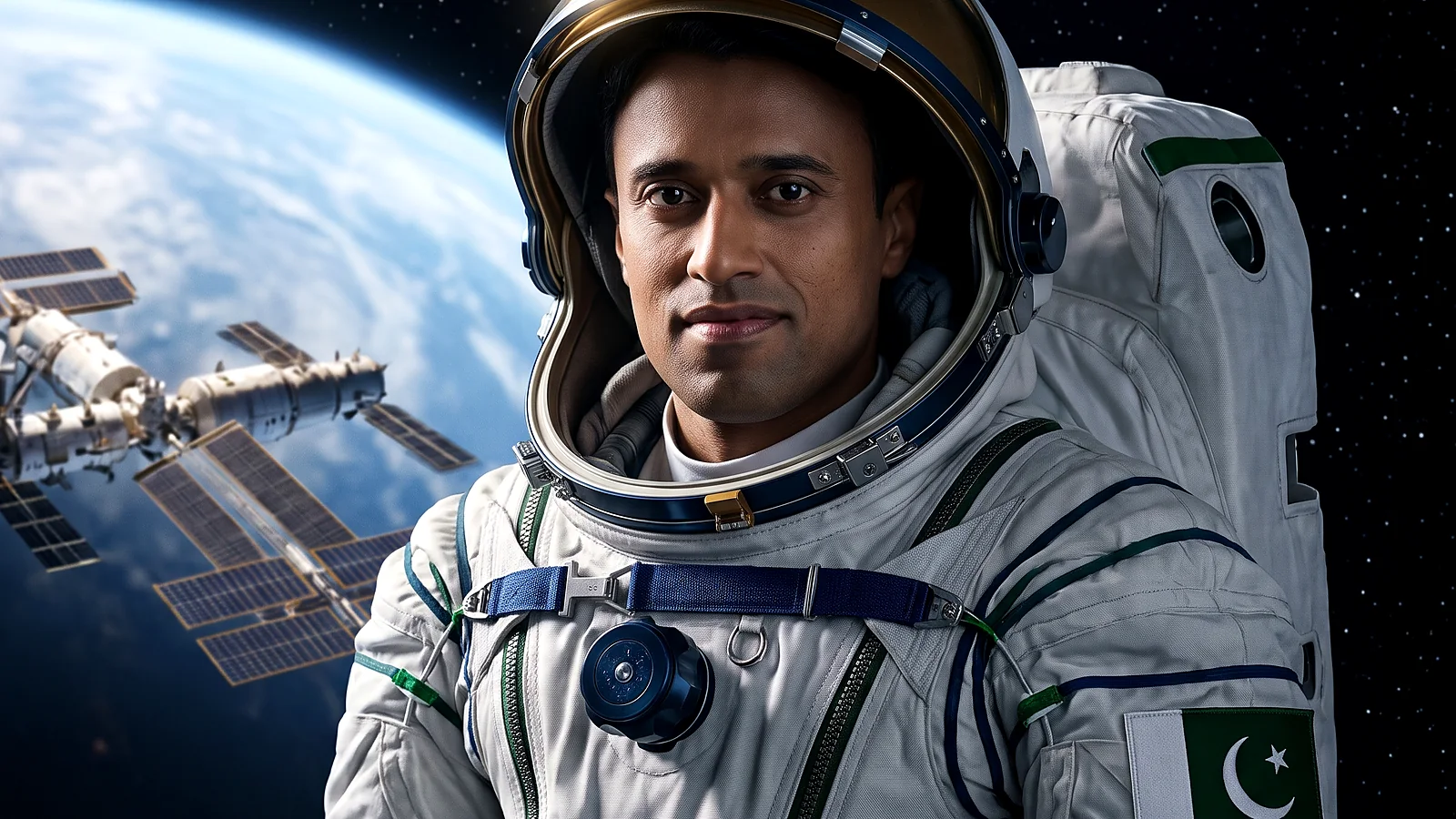
Cover image: AI-generated illustration, not an actual photo.
Pakistan’s first astronaut, Muhammad Zeeshan Ali, is now in orbit. China’s Shenzhou-24 spacecraft lifted off with him on Wednesday, 25 November 2026, and docked with the Tiangong space station the same morning. Ali is also the first foreign astronaut ever to board China’s station.
This guide covers the basics: who flew, when the rocket left, what he will do up there and why the mission matters for Pakistan.
Who Is Pakistan’s First Astronaut?
Muhammad Zeeshan Ali is a Pakistan Air Force pilot. He made the final two after three rounds of screening. The other finalist, Pakistan Navy pilot Khurram Daud, completed the same training and will serve as his backup.
Both men trained at the Astronaut Centre of China. Their course covered spacecraft and station operations, experiment procedures and emergency drills. Ali also learned Chinese commands and technical terms, so he can now talk to his crewmates in their own language.
At a press briefing in Jiayuguan, Ali thanked China for its support. He said he arrived carrying the hopes of 250 million Pakistanis.
Shenzhou-24 Launch Date and Time in Pakistan
Shenzhou-24 lifted off on Wednesday, 25 November 2026, at 8:18am Beijing time. In Pakistan, that was 5:18am, just before Fajr.
A Long March-2F rocket carried the spacecraft from the Jiuquan Satellite Launch Centre in Gansu, north-western China. Teams had moved the rocket and spacecraft to the launch area on 17 November and finished the final full rehearsal four days later.
The China Manned Space Agency (CMSA) confirmed that Shenzhou-24 docked with Tiangong three hours and 38 minutes after liftoff.
Meet the Shenzhou-24 Crew
| Astronaut | Role | Background |
|---|---|---|
| Tang Hongbo | Commander | Flew on Shenzhou-12 and Shenzhou-17. This is his third trip to Tiangong, a first for any astronaut. |
| Wu Yi | Mission pilot | From China’s third batch of astronauts. This is his first spaceflight. |
| Muhammad Zeeshan Ali | Payload specialist | Pakistan Air Force pilot and the first foreign visitor to Tiangong. |
What Will Zeeshan Ali Do in Space?
A payload specialist focuses on science. Ali will install samples and research equipment, run planned experiments and help with the crew’s daily routine.
Pakistani experiments on board
Pakistani universities sent more than 300 research ideas to SUPARCO, the national space agency. Chinese institutions picked four biotechnology experiments from that pool. SUPARCO says the work includes growing microalgae as a possible food and oxygen source for future missions, and testing how spaceflight affects quinoa seeds. Both link back to food security and climate change, two problems Pakistan knows well.
CMSA says the crew will carry out around 90 experiments in total. They will also take over from the outgoing Shenzhou-23 team and handle routine station maintenance.
Halal food and bilingual manuals
China’s astronaut centre prepared halal space food for Ali. It also produced Chinese-English operating manuals, so every instruction stays clear during the flight.
How Long Will He Stay in Space?
SUPARCO says Ali will spend about one week on Tiangong. He will then return to Earth on the Shenzhou-23 spacecraft, which docked with the station in May.
The rotation brings one more change. Zhu Yangzhu, a member of the Shenzhou-23 crew, will stay on board for a year-long residency experiment.
Pakistan’s Space Journey So Far
This flight did not come out of nowhere. Pakistan and China have worked together in space for years, mostly on satellites.
- 2024: China’s Chang’e-6 Moon mission carried Pakistan’s first CubeSat.
- February 2025: SUPARCO and CMSA signed an agreement to select and train Pakistani astronauts for Tiangong.
- October 2025: A Chinese Kinetica-1 rocket put Pakistan’s first hyperspectral satellite into orbit.
- April 2026: Ali and Daud began training in China.
- 24 November 2026: China confirms Ali for the Shenzhou-24 seat.
- 25 November 2026: Shenzhou-24 launches and docks with Tiangong.
China has stayed out of the International Space Station since 2011, when the US barred NASA from working with Chinese space agencies. Since then, Beijing has built its own station and looked for partners. Pakistan becomes the first to send an astronaut there.
Why This Mission Matters
- A national first: Pakistan joins the short list of countries with their own astronaut in orbit.
- A first for China: Tiangong has never hosted a foreign astronaut. This is also the first joint crewed flight in China’s human spaceflight programme.
- Local science in orbit: The experiments came from Pakistani universities, so local researchers get data straight from space.
- Inspiration at home: Students in Karachi, Lahore or Quetta can now point to a Pakistani who trained for space and made the cut.
Federal ministers congratulated Ali as the mission got under way. Information Minister Attaullah Tarar called it a source of joy and pride for the whole nation, while Planning Minister Ahsan Iqbal and Deputy Prime Minister Ishaq Dar also posted messages of congratulations on X.
What Happens Next
Ali will spend about a week on Tiangong, running his experiments alongside the Chinese crew. He will then fly home on the Shenzhou-23 spacecraft. SUPARCO’s social media pages and Pakistani news channels will share updates and photos from the station during the week.
If the mission has got you looking up, our guide to the next supermoon in Pakistan tells you when to catch the Moon at its biggest and brightest.
FAQs
Who is Pakistan’s first astronaut?
Muhammad Zeeshan Ali, a Pakistan Air Force pilot, is Pakistan’s first astronaut. He flew as a payload specialist on China’s Shenzhou-24 mission.
When did Shenzhou-24 launch in Pakistan time?
Shenzhou-24 lifted off at 5:18am PKT on Wednesday, 25 November 2026, from Jiuquan in north-western China, and docked with Tiangong about three and a half hours later.
Is Zeeshan Ali the first Pakistani in space?
He is the first Pakistani in orbit. Namira Salim reached space in 2023, but on a short suborbital Virgin Galactic flight that did not go into orbit.
Who is the backup astronaut?
Pakistan Navy pilot Khurram Daud trained alongside Ali in China and served as his backup.

Munis Khan is a Digital Marketer and content producer who build innovative ideas and content to promote various products of the company in the market. He aims to extend his assistance in B2B and IT marketing by his engaging blog.