


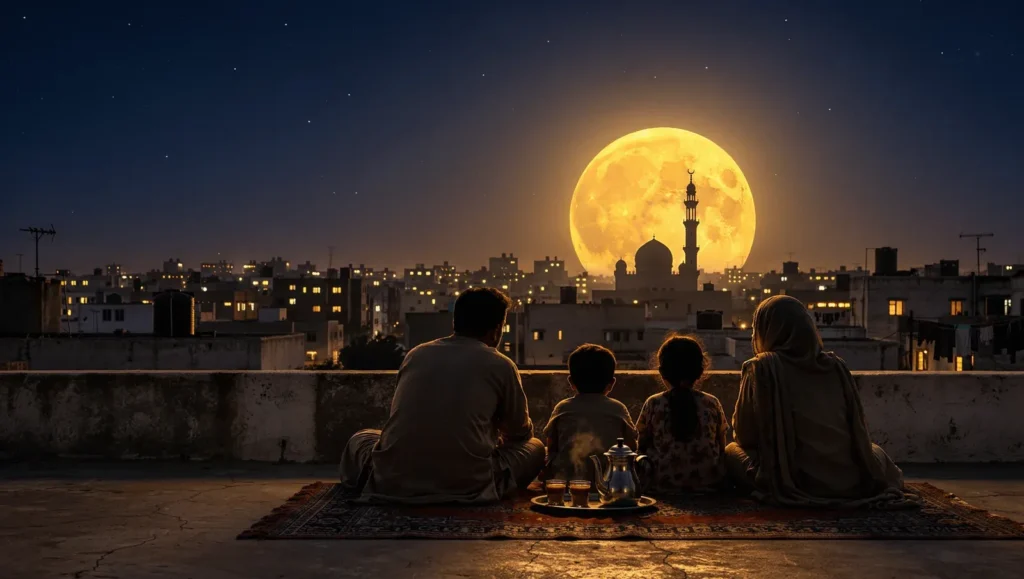
Did you look up last night? The supermoon in Pakistan turned Tuesday’s sky silver, and people in Karachi, Lahore, Islamabad and Quetta shared photos well past midnight. This was the second supermoon of 2026, and another one arrives before the year ends. Here is what happened, why the moon looked bigger, and how to catch the next one.
What Happened on 24 November
November’s full moon, known as the Beaver Moon, reached its full phase at 7:53pm Pakistan time on Tuesday. That works out to 2:53pm GMT. You did not need to wait for that exact minute, though. The moon looked full from the moment it rose in the east after sunset.
In Karachi, the moon rose at around 5:18pm. Other cities saw it a few minutes earlier or later. Clear skies in many parts of the country made it an easy show to enjoy from rooftops and balconies.
The moon also sat close to the Pleiades, a small cluster of stars often called the Seven Sisters. If you looked carefully, you could spot a fuzzy group of tiny stars near the bright moon.
What Is a Supermoon?
The moon does not circle Earth in a perfect ring. It follows an oval path, so its distance from us changes every month. Astronomers call the closest point perigee.
A supermoon happens when a full moon lands at or near perigee. On Tuesday night, the moon sat about 360,768 km from Earth. An average full moon sits a little farther away.
How much bigger and brighter did it look?
The answer depends on what you compare it with. Here is a simple breakdown:
| Compared with | Size | Brightness |
|---|---|---|
| An average full moon | About 6.5% larger | About 13.5% brighter |
| The smallest full moon of the year | Up to 14% larger | Up to 30% brighter |
Most people cannot spot a 6.5% difference with the naked eye. The moon often looks huge near the horizon, but that comes from the “moon illusion”. Your brain plays the trick, not the moon.
Why do people call it the Beaver Moon?
The name comes from old North American traditions. November was the month when beavers got busy building dams before winter. Every full moon has a nickname like this. January brings the Wolf Moon, and December brings the Cold Moon.
All the Supermoons of 2026
Tuesday’s moon was not the first of the year. Here is the full picture so far:
- 3 and 4 January: The Wolf Moon. SUPARCO said it rose at 5:51pm on 3 January with 99.8% illumination.
- 24 November: The Beaver Moon, the second supermoon of 2026.
- 24 December: NASA lists the Cold Moon as the third supermoon of the year.
Back in January, SUPARCO said 2026 would not have a third supermoon. NASA and several astronomy sources now list 24 December as one. Keep an eye out for SUPARCO’s December update for official timings in Pakistan.
When Is the Next Supermoon in Pakistan?
The next one falls on 24 December 2026. The nights of 23 and 24 December should both give you a big, bright moon. The timing suits families too. Quaid-e-Azam Day falls on Friday, 25 December, so many people will start a long weekend right after it.
Plan a late dinner outdoors, a rooftop chai session or a drive out of the city. December nights feel cooler, and the sky in the south often stays clear in winter.
How to Watch the Supermoon in Pakistan
You do not need a telescope or binoculars. Your eyes will do the job. These simple steps will give you a better view:
- Watch at moonrise. Face east just after sunset. The moon looks biggest and most golden close to the horizon.
- Move away from bright lights. Street lights and billboards wash out the sky. A rooftop, a park or an open field works better than a busy road.
- Check the weather first. Smog and clouds can hide the moon, especially in Lahore and other Punjab cities in winter.
- Give your eyes time. Spend ten minutes away from your phone screen. Stars and planets will slowly appear around the moon.
Best places to watch away from city lights
In Karachi, the glow of the city makes the sky hazy. Many families book one of the popular farmhouses on the outskirts of Karachi for a night of food and open skies. Up north, the valleys offer some of the darkest skies in the country. Our guide to things to do in Gilgit-Baltistan covers places where the night sky alone is worth the trip. Pack heavy jackets if you travel north in December.
How to Photograph the Supermoon on Your Phone
- Tap the moon to focus, then slide the exposure down. This stops the moon from turning into a white blob.
- Use 2x or 3x zoom. Full digital zoom makes the picture grainy.
- Rest your phone on a wall or railing to stop shaking.
- Add a minaret, tree or building to the frame. It shows how big the moon looks.
- Switch off night mode if the moon looks blurry.
Does a Supermoon Affect Us?
NASA says a supermoon can push tides slightly higher than usual. The moon pulls harder on the oceans when it comes closer. People living near the coast may notice the water climbing a little higher on the shore.
Beyond that, it is simply a beautiful sight. Social media posts linking supermoons to disasters or bad luck have no basis in science. Enjoy the view and share your best shot.
FAQs
When was the supermoon in Pakistan in November 2026?
It appeared on Tuesday, 24 November 2026. The moon turned full at 7:53pm Pakistan time, but it looked full from moonrise onwards.
When is the next supermoon?
NASA lists 24 December 2026 as the next one. Look east after sunset on 23 and 24 December for the best view.
Is it safe to look at a supermoon?
Yes. Moonlight cannot harm your eyes, so you can look at it for as long as you like. Only the sun needs special eye protection.
Do I need a telescope to see it?
No. A supermoon looks great with the naked eye. Binoculars can show craters and dark patches if you want a closer look.


Munis Khan is a Digital Marketer and content producer who build innovative ideas and content to promote various products of the company in the market. He aims to extend his assistance in B2B and IT marketing by his engaging blog.